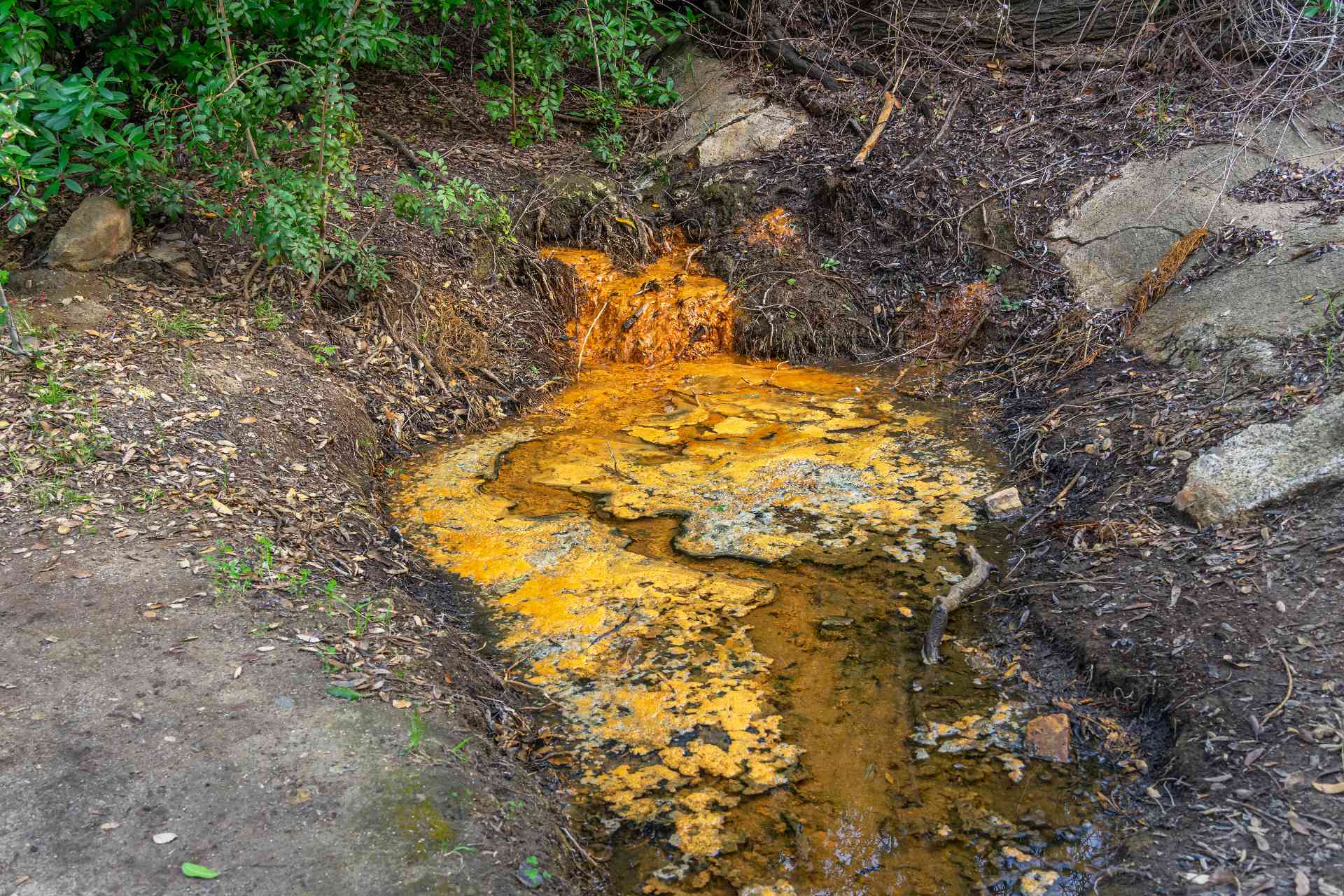
What Kind of Septic System Do I Have? How to Tell in a Few Minutes
Most homeowners have never had a reason to learn what their septic system is called. Then a form asks, and it’s easy to get stuck. You can usually tell in a few minutes, from what you can see in your yard and what’s in your house paperwork.
There are four kinds you’re likely to have.
Traditional
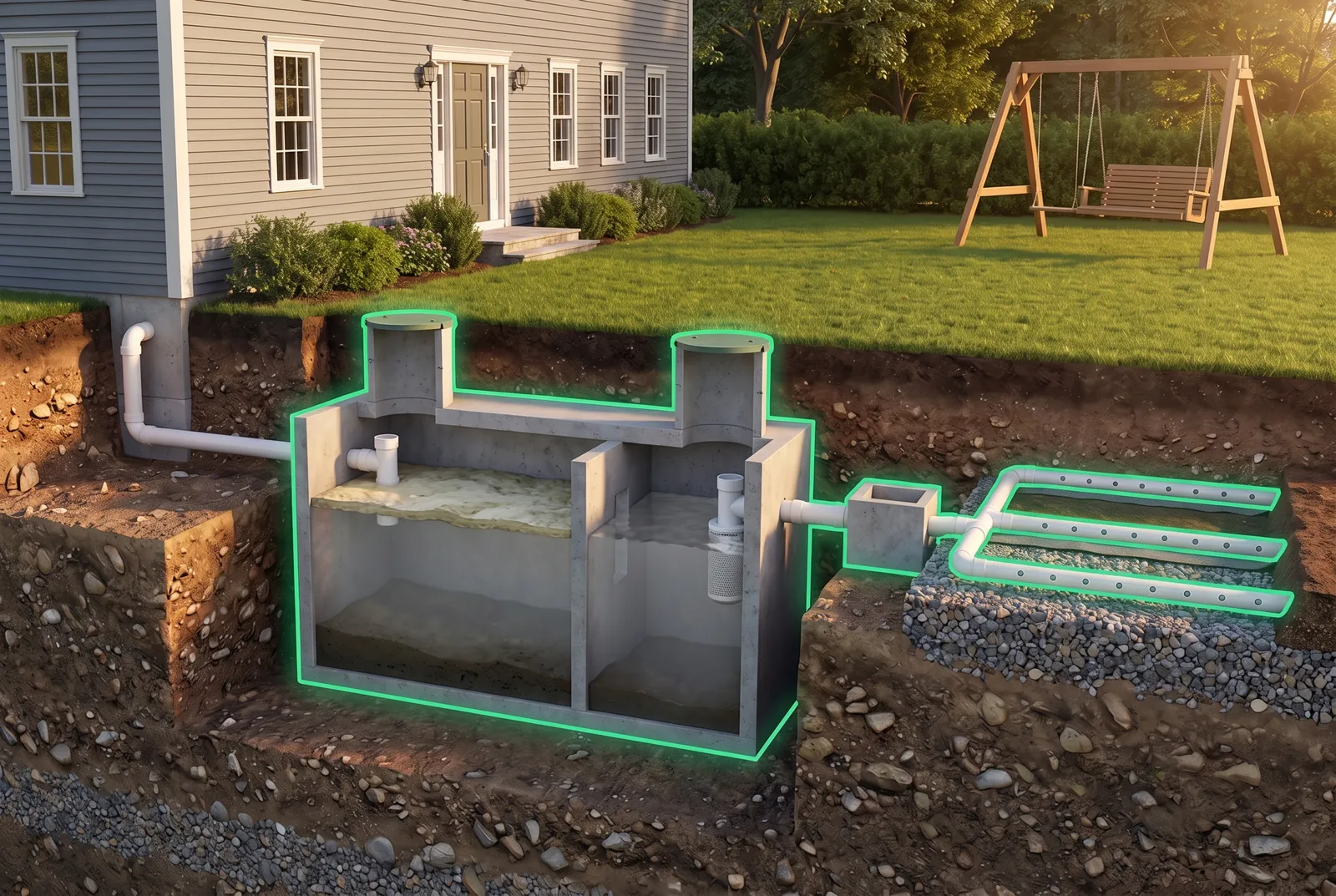
This is the most common kind. A tank buried in your yard connects to a leach field, also called a drain field: a set of pipes under the lawn that lets treated water soak into the soil. Everything moves by gravity. There’s no pump, no power and no alarm.
What to look for: one or two tank lids or risers in the yard, and a flat, grassy area beyond them. Nothing about the system plugs in.
Aerobic
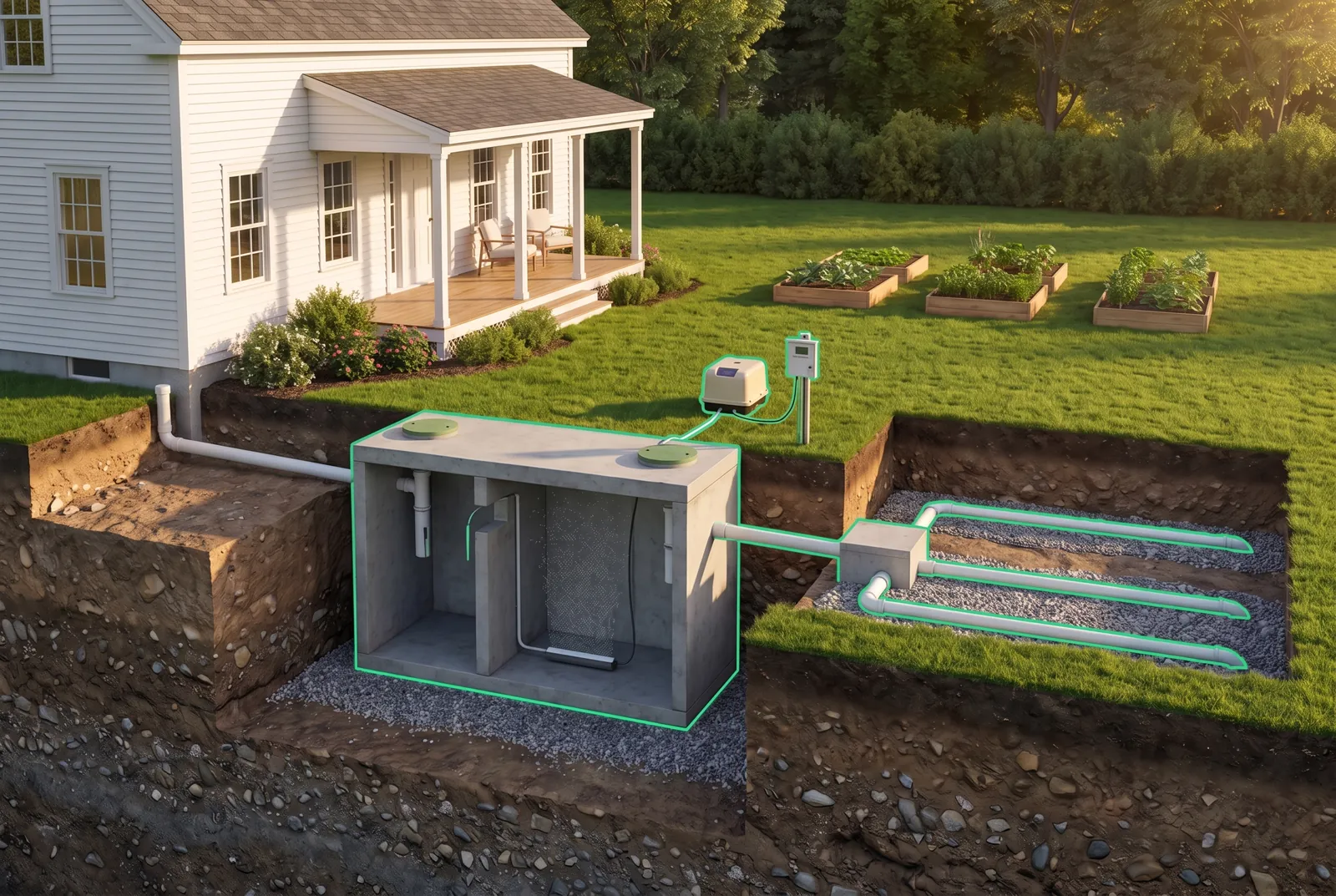
An aerobic treatment unit, or ATU, adds air to the tank so waste breaks down faster. That means it has an air pump or motor, and usually an alarm.
What to look for: a low hum from a pump near the tank, and a small control panel or alarm light, often on the side of the house or on a post in the yard.
Mound
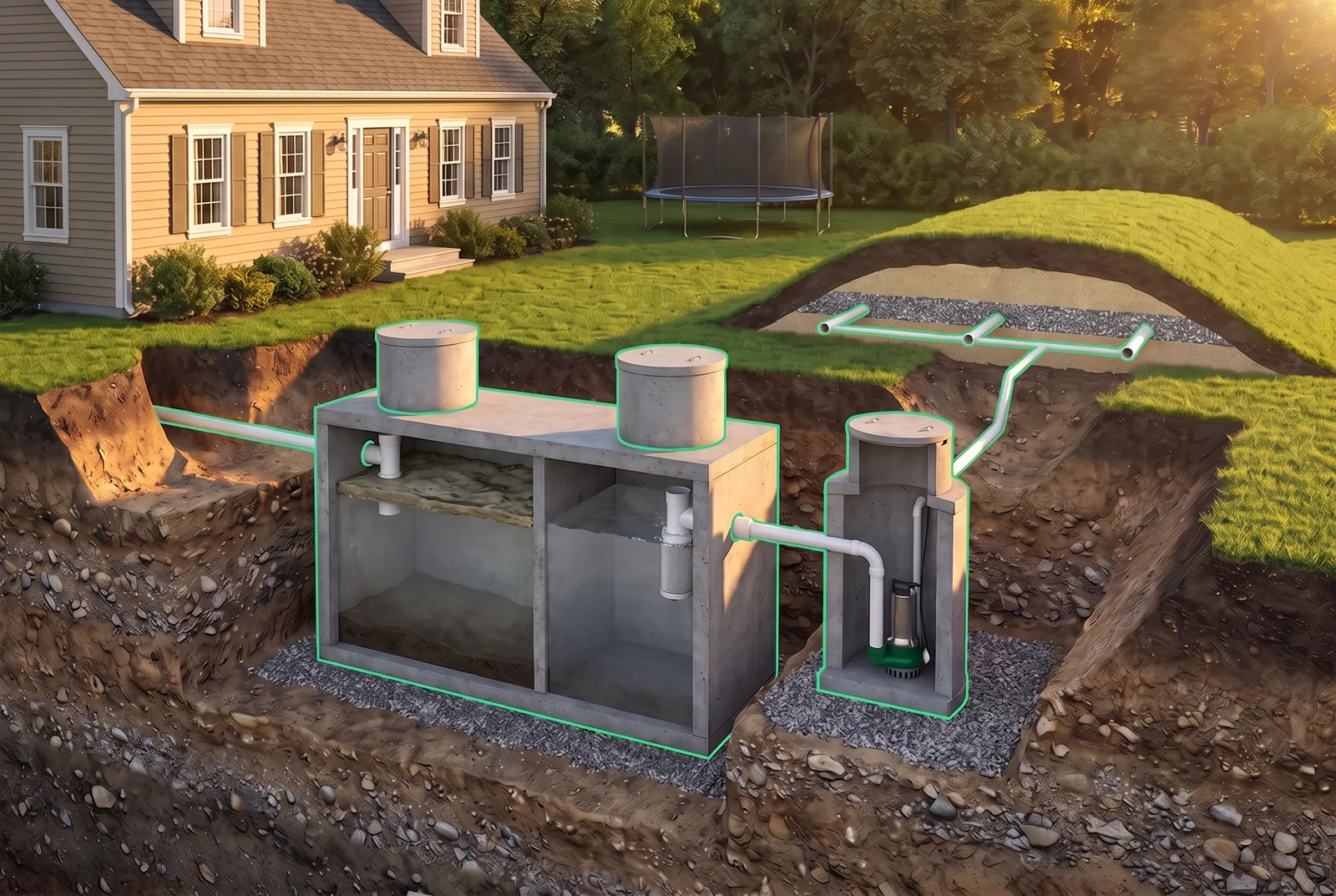
A mound system works like a traditional one, except the drain field sits in a raised mound of sand. It’s usually built that way when the ground under the yard doesn’t drain well enough for a flat field.
What to look for: a long, grassy hump in the yard, often a few feet high, fed from the tank.
Cesspool or seepage pit
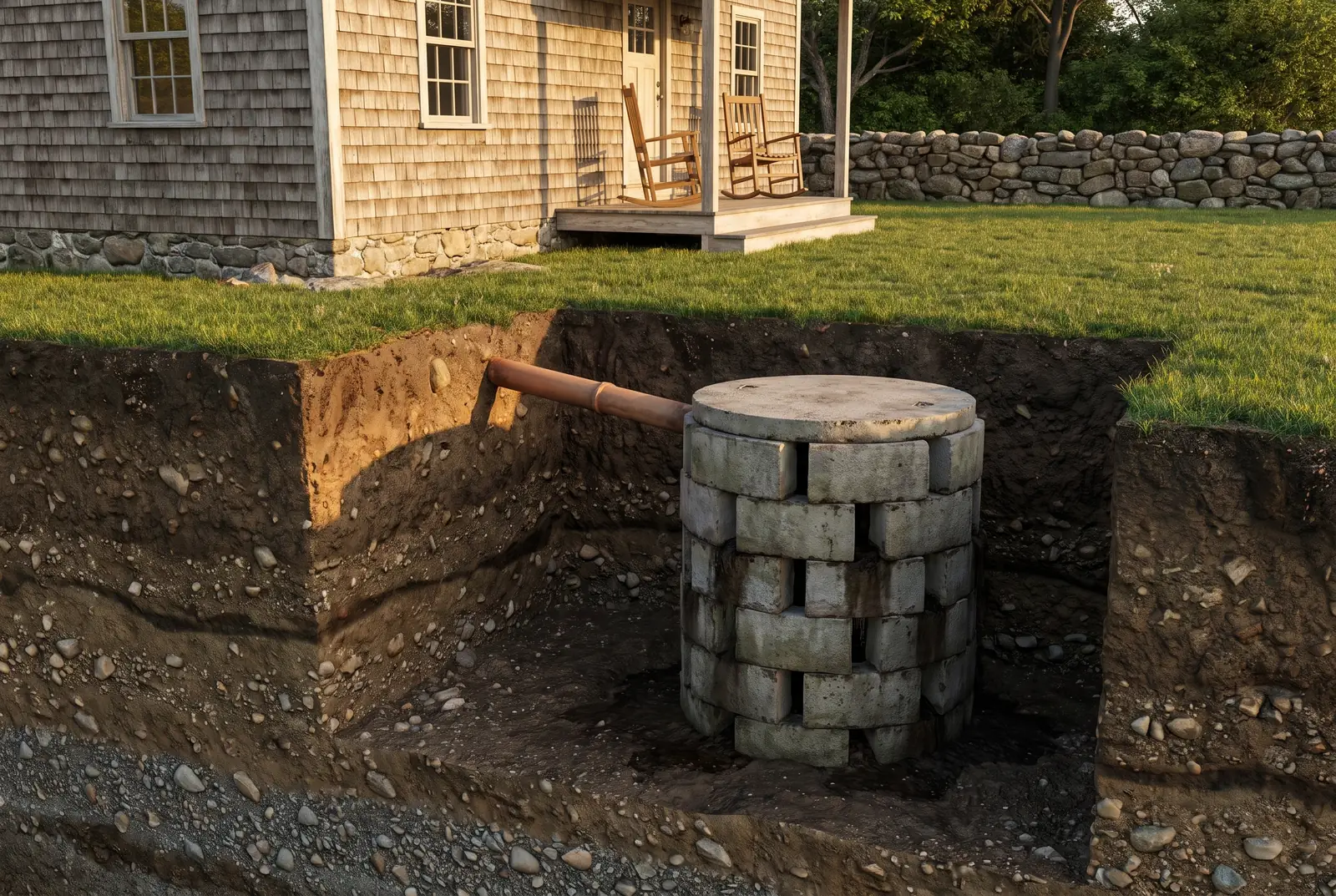
A cesspool is a single pit that lets wastewater seep straight into the ground. There’s no separate tank and leach field. They’re more common in older homes.
What to look for: a single pit and no leach field. One thing worth knowing: people use the word “cesspool” loosely, and plenty of homes described that way turn out to have a traditional tank and field. If your records say cesspool, it’s worth confirming.
Where to check if you can’t tell from the yard
- Your home inspection report. If the septic system was inspected when you bought the house, the report usually says what it is.
- Your pumping company. Whoever pumps your tank knows what they pumped.
- Your town or local health department. Many keep septic permits and site plans for each property.
- Your closing documents. Septic details are sometimes included with the sale paperwork.
Why it’s worth knowing
Each kind is looked after a little differently, and knowing yours makes it easier to keep up with pumping and spot problems early. It also matters when something goes wrong. When a leach field fails, the replacement comes out of the homeowner’s pocket. Here’s what leach field failure looks like, and what causes it.
Which systems a ProGuard plan covers
A ProGuard Septic System plan covers traditional, aerobic and mound systems. It covers the system, including the leach field, up to $25,000. Cesspools and seepage pits aren’t eligible. There’s no inspection and no home visit to enroll.
Still not sure which you have? Choose “Not sure” when you enroll, or call us at (888) 354-0677, Monday to Friday, 8:30am–6:00pm ET, and we’ll help you work it out.
Quick FAQ
What’s the most common kind of septic system?
Traditional: a tank and a leach field, with no pump or power.
How do I know if I have an aerobic system?
Listen for an air pump or motor running near the tank, and look for an alarm panel or light. Traditional systems have neither.
Is a mound system a septic system?
Yes. It’s a septic system whose drain field is built up in a raised mound of sand. A ProGuard Septic System plan covers mound systems.
Is a cesspool the same as a septic tank?
No. A cesspool is a single pit with no leach field. ProGuard’s Septic System plan doesn’t cover cesspools or seepage pits.
What if I’m still not sure?
Call us at (888) 354-0677 and we’ll help you identify it. Most people aren’t sure until someone walks them through it.
Know your system type? Get covered in a couple of minutes, or see what the Septic System plan covers.