
Underground oil tank coverage, up to $100,000 per claim
A buried oil tank gives no warning before it leaks — and when it does, the bill is for excavation, remediation and disposal, not just a new tank. Homeowners insurance almost never pays it. ProGuard does, and has since 1999.
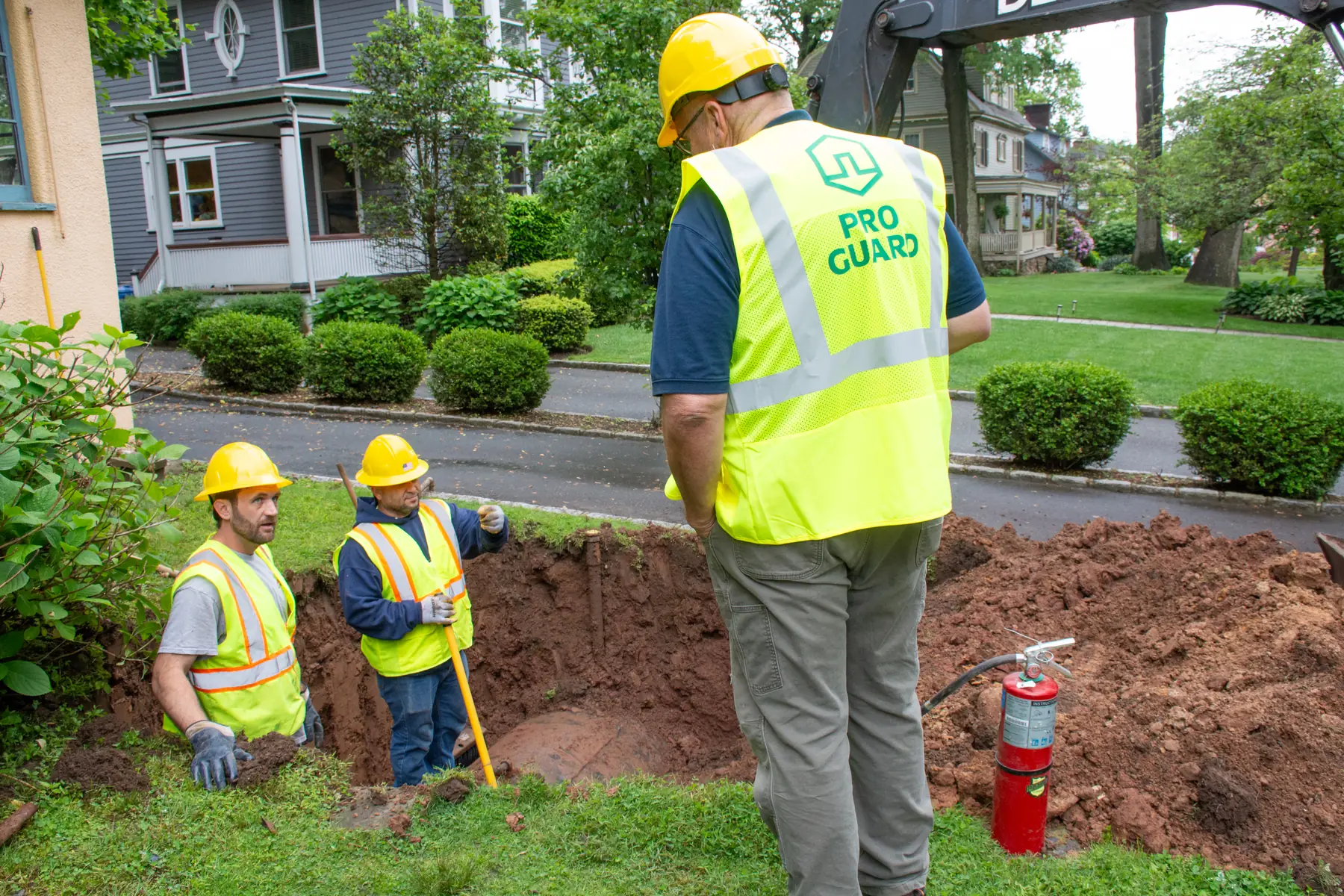
What the plan covers
A covered underground tank failure is handled end to end — we appoint the contractor, manage the work and deal with the paperwork.
Tank removal and disposal
If an oil leak is visible, comprehensive service to remove the tank, collect remaining oil and safely dispose of the old tank.
Ground contamination treatment
Remediation to remove harmful pollutants from soil and groundwater, restoring your property to a safe condition.
Soil testing and backfill
Quality backfill using appropriate materials to restore excavated areas after tank removal, with testing performed and the paperwork completed to satisfy state requirements.
Labor costs
Full coverage of skilled labor for safe, environmentally compliant tank removal, remediation and soil backfill.
Voluntary tank removal option
An add-on for homeowners who want to remove the tank proactively while staying protected against leaks and environmental risk. Available after your first year, for an additional $365 a year.
Third-party liability
If a leak reaches a neighboring property or the groundwater system, the coverage includes remediating those properties too.
The one failure your policy excludes
Most homeowners policies write out gradual damage and pollution — which is exactly how a buried tank fails. A single underground leak can run past $100,000 once excavation, remediation and disposal are counted, and the homeowner is liable for contamination that spreads beyond their own boundary. That gap is the whole reason this plan exists.
See how the plans compare →How getting covered works
Enroll online
A few minutes, no long forms. You can start before any testing is done.
Soil test within 30 days
Attach a soil test at checkout, or send one within 30 days of payment. Your coverage becomes active once we have a clean test. We will tell you which laboratories we accept — this is the one step that is different from our other plans.
You are covered
Once the test passes, your coverage runs for the year. One call starts a claim and we manage it from first visit to final sign-off.
Questions homeowners ask
How do I know if I have an ‘Aboveground Oil Tank’ or an ‘Underground Oil Tank’?
An underground oil tank is hidden in the soil. The only sign of its existence will be a fill pipe and vent pipe above where the tank is located. Aboveground tanks are visible. Even if a tank is situated in a basement below the level of the ground outside – ProGuard views it as an aboveground tank.
How much does an Underground Oil Tank Protection Plan from ProGuard cost?
It varies on the location of the tank and if you are with a partner of ProGuard for delivery of your oil. Underground oil tank coverage starts at $549 per year.
What is covered as part of an Underground Oil Tank Protection Plan?
Underground Oil Tank Protection Plan provides $100,000 of environmental clean-up coverage. It also contributes $1,500 to the cost of a new tank.
How do I know if I’m eligible to purchase an Underground Oil Tank Protection Plan?
You can attach a soil test at checkout, or send one within 30 days of payment. Signing up is never held up waiting for it — but your coverage only becomes active once we have a clean test confirming the tank is not leaking.
How can I purchase an Underground Oil Tank Protection Plan?
You do not need to call first. Attach a soil test at checkout, or send one within 30 days of payment. We accept tests from certain laboratories and will tell you which.
Is there a deductible if I have a leak and need to make a claim?
Underground Oil Tank claims carry a $2,500 deductible. Septic and Aboveground Oil Tank claims carry a $500 deductible.
When I have a problem and need ProGuard, what is the customer experience?
Don’t worry, you’re in safe hands. We’ve been in business for over 25 years and we’ve seen it all.
You should immediately contact us to file a claim either online or by calling us on 888-354-0677. Once a claim has been filed, you will be assigned an expert claims handler who will request specific information. We will then assign one of our field experts to your case, and they will be in touch with you to project manage your claim to successful close in a timely manner and to the standards that we demand from our technician and contractor network.
Why should I purchase a protection plan on my underground oil tank?
All underground tanks, which were typically made of steel and installed decades ago, are now corroding from their contact with the soil and water. Every one will eventually leak, it is just a matter of time. Once oil escapes, it will make its way through the soil towards water courses. If there is a leak, your state or town will have strict rules on cleanup and soil disposal, costing you tens of thousands if you do not have ProGuard coverage.
ProGuard also offers a great way to reassure a homebuyer if you sell your home. Coverage is transferable. Contrary to real estate folklore, there is NO requirement to remove your underground tank in order to sell your house.
What are the risks associated with a failed underground oil tank?
There are many to list – and only ProGuard knows how to handle them:
- The first crisis to handle will be how to remove the oil from the bad tank.
- You may have a literal ton of oil in the tank that now is escaping.
- Calling a specialist emergency contractor to pump the oil out will cost thousands.
- Your home has no heat. You now need to find someone to install an aboveground tank.
- You are in a hurry as you have no way to heat your home. The contractor knows this, so you have no power to negotiate price with them. The price goes up.
- The contractor points to all the environmental regulations that have been broken and how onerous the cleanup is.
- Now the bill is heading to five-figures.
- If the oil has escaped to neighboring land you may be liable to clean up that property too.
- Work starts to remove the tank, but if your soil is sandy or the tank is close to the home – you may need to support the home. The bill approaches six figures.
- The job is often NOT DONE until the DEP says the soil is clean enough.
Does my homeowner’s insurance policy cover my underground oil tank?
Almost certainly not. Tanks fail due to corrosion / wear and tear, which is a general exclusion in most policies, and many policies specifically exclude the consequences of oil contamination for any reason as well.
How long does an Underground Oil Tank Protection Plan last?
Our typical coverage lasts one year.
Won’t my oil delivery company look after me if my tank fails?
Oil companies specialize in delivering oil – we specialize in protecting oil tanks. Your oil company might offer you a ‘tank protection program’ – if it is not ProGuard then it is likely a shallow coverage, often only offering a discount on a replacement tank, and no clean-up or environmental remediation. Nor does it offer the expertise, independence or impartiality that we offer in representing you when a claim occurs.Importantly, these plans are not underwritten by a large insurance company and so you can’t be 100% sure they will be there to pay your claim. Look for the name ‘ProGuard’ before you buy!
How long do underground oil tanks usually last?
The lifespan of an underground oil tank depends on soil conditions and tank material. Steel tanks may last twenty to thirty years while modern fiberglass varieties can last longer. Because aging tanks can develop issues over time many homeowners explore underground oil tank warranty style protection options and educational resources that help them prepare for long term maintenance needs.
What signs may suggest an underground oil tank needs attention?
Changes in fuel usage, outdoor oil odors or staining around the fill area can be signs a tank needs a professional look. Most homeowners simply stay aware of maintenance schedules and keep notes about their system. It is also common for people to research things like underground oil tank warranty information online so they can be better prepared as a tank gets older.
How can an underground oil tank affect selling a home?
Buyers usually ask about tank age, maintenance and inspection records. Clear documentation can make the real estate process smoother. During this stage buyers and sellers often review general information about underground oil tank insurance and environmental guidelines simply to understand expectations and common practices.
Do all home inspectors check for underground oil tanks?
Not necessarily. General home inspections may not include tank detection unless it is visible. Some homeowners use specialists who scan or test soil around suspected locations. People often come across underground oil tank warranty articles or homeowner forums during this process because they are trying to learn what others have done.
Can soil or climate impact the lifespan of an underground oil tank?
Yes. Moisture, soil acidity and temperature swings can affect how long a tank lasts. For this reason many homeowners keep up on inspections and browse information about long term care and underground oil tank insurance as part of their research into keeping a property safe.
Are modern underground oil tanks different?
Steel tanks typically last twenty to thirty years depending on soil conditions, and modern fiberglass tanks may last longer. As tanks age, maintenance planning and underground oil tank coverage considerations become more relevant for long term property protection.
Do rules for underground oil tanks vary by location?
Yes. Regulations differ by state and local authority. Some areas require documentation, certified removal and soil testing, while others have more flexible standards. It is important to follow local environmental guidance and maintain appropriate underground oil tank coverage and inspection records when applicable.
Still not answered?
Robin, our assistant, answers plan questions on the spot — what is covered, what it costs, whether you are eligible, and what happens when you claim.
Protect the tank you cannot see
Enroll online in minutes, or call (888) 354-0677 and we will walk you through it.
Get covered