Most homeowners don’t think about their septic system very often. It’s underground, out of sight, and if it’s working, there’s no reason to pay attention to it. That’s exactly why septic replacement costs catch people off guard. When a system finally fails, it usually fails at the worst possible time – during a home sale, a period of high usage, after a backup, or when inspectors get involved – and the price tag can be shocking.
There isn’t a single number that applies to every home, but one thing is consistent: septic replacement is expensive, and insurance almost never helps. If your septic system fails and needs major repairs or replacement, you can expect to pay anywhere from $10,000 to $40,000 or more. Regular home insurance might not cover these costs, and you may need a septic insurance plan in such cases.
The Short Answer on Cost
For most homeowners, a full septic system replacement lands somewhere in the tens of thousands of dollars. On simpler properties with good soil, deep groundwater levels and fewer regulatory hurdles, costs are lower. On tighter lots, older homes, or properties with poor soil, high water table levels or strict local rules, costs climb fast.
That wide range exists because septic systems are not off-the-shelf products. Each one is designed for a specific property, and replacing it means rebuilding a critical piece of infrastructure from scratch. This often means that the septic tank replacement costs vary in each situation.
What “Replacement” Really Means
Many people hear “septic tank replacement” and picture swapping out a tank. In reality, that’s rarely all that’s involved.
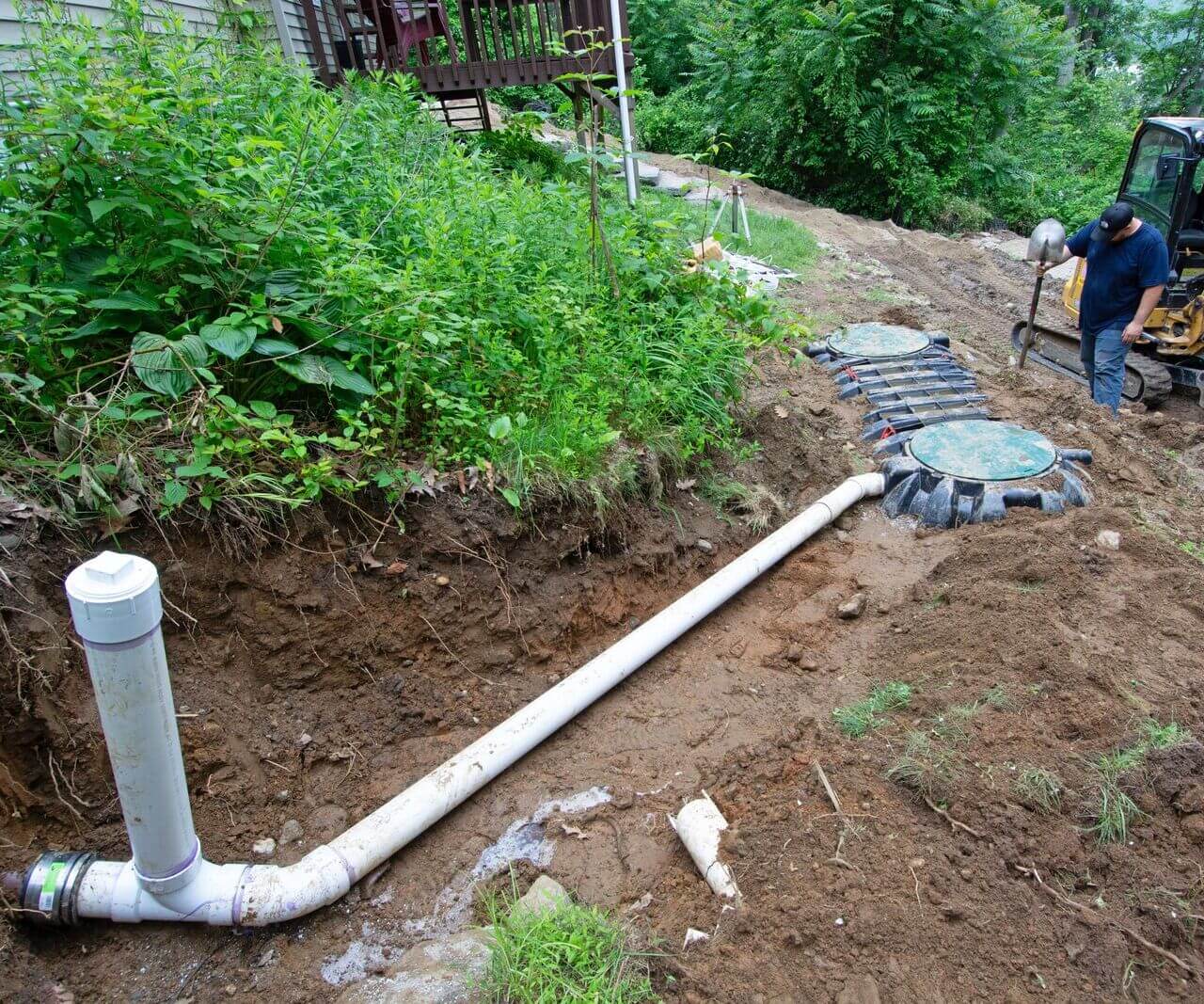
A full replacement usually includes removing the old tank, installing a new one, and rebuilding the system that moves and treats wastewater. In many cases, the leach field is the real problem, not the tank itself. When a leach field fails, it often cannot simply be repaired – it has to be replaced or relocated.
That means excavation, heavy equipment, permitting, regulatory oversight, and significant disruption to the yard. Landscaping, driveways, or trees may need to be removed and later restored, all of which adds to the final cost.
Why Costs Vary So Much From House to House
Two neighbors can replace septic systems in the same year and pay very different amounts to cover the septic tank replacement cost. That’s because several site-specific factors drive cost.
Soil conditions are one of the biggest. If the soil drains well, a standard system may be allowed. If it doesn’t, local health departments often require engineered solutions that are more complex and more expensive.
Lot size and layout matter as well. Smaller lots may not have room for a new drain field in the original location. When a system has to be relocated, design costs, permitting, and excavation all increase.
Local regulations also play a major role. Many older systems were installed under rules that no longer apply. When a system is replaced today, it usually must meet current standards or code, even if the old system was legal when installed. That alone can push costs significantly higher.
Leach Field Failure Is the Cost Multiplier
For many homeowners, the moment things get expensive is when the leach field fails. A tank can sometimes be replaced without touching the field. A failed leach field almost always triggers a much larger project.
In some cases, homeowners learn that their property no longer qualifies for the same type of system it once had. New soil tests or updated regulations can force upgrades that were never part of the original setup.
This is often when septic system replacement cost jumps from “painful” to “financially overwhelming.”
Permits, Testing, and Paperwork Add Up
Septic replacement is not just a construction job. It is a regulated process overseen by local health departments.
Before work even begins, homeowners may need to pay for soil testing, system design, permits, and inspections. These costs are unavoidable and usually required upfront. They also vary widely by location, which is why online estimates can be misleading.
The Costs No One Warns You About
Septic projects have a habit of uncovering surprises. Old tanks may be in undocumented locations. Soil contamination may require removal. Access for excavation equipment may be more difficult than expected.
Because everything is underground, homeowners often don’t know what they are dealing with until digging starts. That uncertainty is part of why contractors are cautious with estimates – and why final costs sometimes exceed initial expectations.
Why Homeowners Insurance Rarely Helps
This is where many homeowners feel blindsided. Septic tank replacement is almost always excluded from homeowners insurance because failure of a septic system is almost always due to wear and tear, age, misuse, overuse, soil and root system movement. These sources of failure are not covered by homeowners insurance policies since insurance only covers accidents or perils (hail, fire, storm, flood, etc.) – not wear and tear.
Even if insurance covers damage inside the home caused by a backup, it usually does not cover replacing the system that caused it. From the insurer’s point of view, septic system replacement is an ownership cost, not an accidental loss.
When Replacement Comes Up During a Sale
Septic tank replacement is commonly triggered during real estate transactions. An inspection may reveal a failing system, or a lender may require proof that the system meets current standards.
When this happens, homeowners are often under time pressure. Options become limited, and cost-saving measures are harder to pursue. This is one of the most stressful ways to encounter septic replacement, and one of the most common.
The Real Takeaway
Septic systems don’t fail often, but when they do, replacement is rarely simple or cheap. Costs vary widely, but full replacements frequently reach into the tens of thousands of dollars, driven by soil conditions, regulations, and site-specific challenges.
Because insurance typically does not cover septic system replacement cost, septic systems represent a long-term financial responsibility that many homeowners underestimate. Knowing that reality ahead of time doesn’t make the cost smaller, but it does make it less surprising when the day comes.